Judges
International Safety Media Awards judges are selected for their expertise and knowledge in: Media Production, Strategic Communication, Application of Behavior Change Theory, and Evaluation of Safety Promotion and Injury Prevention Initiatives.
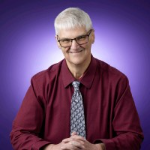
Paul Bolls, PhD
USA
Paul Bolls, PhD, is an international expert in Media Neuromarketing Science, a science focused on helping public health communicators develop and deliver media messages that effectively resonate with the human brain. Dr. Bolls has almost 30 years of experience conducting research on how the human mind processes and is impacted by media content and technology. His work encompasses academia and industry. He is a Professor of Marketing and Strategic Communication and works as a Neuromarketing industry consultant. He recently launched his own Media Neuromarketing Science consulting company, “Be The Light Media Solutions.”
Starting in August of 2026, he will join the Marketing faculty in the Jake Jabs College of Business at Montana State University in Bozeman, Montana where he will be a non-tenure track teaching professor. Dr. Bolls is a “Montana boy” having grown up in Belgrade, Montana where he now lives with his wife and dog “Jackpot.”
Luciana Iorio
Italy
Luciana Iorio works at the Ministry of Infrastructure and Transport (Italy), and she is chairing Global Forum for Road Traffic Safety (WP1) at UN-ECE, Geneva. She is a permanent member of the International Advisory Committee of IRTE, Institute of Road Traffic Education, Delhi, India. She is regularly engaged in policy dialogue, as she sees technological advancements as a catalyst factor for global safety, sustainability, inclusiveness, equity for social progress.
Professor Koustuv Dalal
Sweden
Professor Koustuv Dalal is a well-known expert in the field of injury prevention and safety promotion. Injury economics is his specialty. He has received the ‘International Safe Community Distinguished Career Award’ for outstanding leadership and dedication in injury prevention and safety promotion, Nov 2017. He has been working in the field for more than 20 years. He was the Director for Centre for Injury Prevention and Safety Promotion, Örebro, Sweden for several years. He has supervised 16 Ph.D. students and more than 50 Master students in the field. He has students and workshop- participants from 92 countries.
Professor Dalal has visited 52 countries for research and evaluation. He has evaluated more than 500 injury prevention and safety promotion programs/projects and provided evidence-based policy advocacy. Injury costs a big percentage of the national health and economic budget. As a health economist Professor Dalal is passionate about community-based participatory research and evidence-based interventions for reducing the burden of injuries, promoting safety and save the resources. He is the senior advisor of the International Safe Community movement.
Ajmal Khan Khoso
Pakistan
What if the crashes we fail to record are the very crashes we could have prevented? That question sits at the intersection of Ajmal Khan Khoso’s work. Ajmal brings a distinctive perspective to road safety — combining front-line law-enforcement experience with injury epidemiology, crash surveillance and global health policy to strengthen how societies understand and prevent road trauma. His research has examined critical gaps in highway crash-reporting systems, including the underreporting of alcohol- and psychoactive-substance-related injuries and the limitations of existing surveillance practices. His work has helped highlight a fundamental challenge: if the right data is not captured, the right prevention strategies cannot be designed.
By examining crash surveillance against international injury-surveillance standards, Ajmal has championed more consistent, standardised and actionable data — turning information collected at the roadside into intelligence that can inform policy and save lives. His contribution extends beyond research. As an International Safety Media Awards (ISMA) judge, he supports the global movement to connect evidence, communication and practical action in injury prevention. Ajmal’s work embodies a powerful principle: better data creates better decisions — and better decisions can create safer roads, stronger systems and fewer lives lost.

Miryam Moya
spain
Forensic Road Safety Expert | Award Winning Author | Professor | Global Road Safety Leader | Advocate | Advisor to Police Governments & Public Agencies | Saving Lives Through Forensic Science | Educator | International Speaker. I’m a Spanish forensic expert, university professor, and award-winning author with over two decades of international experience in traffic operations, road crash reconstruction, and public safety. I’ve collaborated with security forces and police agencies around the world, introduced cutting-edge forensic tools now widely adopted across Europe, and published acclaimed books in English and Spanish.
My academic background includes Columbia University and the Johns Hopkins Bloomberg School of Public Health, where I focused on the intersection of road safety and global health. As a writer, educator, and practitioner, I’m deeply committed to systemic solutions that prevent collisions, reduce injuries, and save lives. I’m here to connect with fellow change-makers and share insights that can advance our collective impact.
LinkedIn
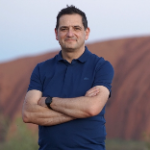
Simon Pase
Australia
Simon Pase‘s career spans the broadcast television, advertising and health sectors. Since 2008 he has been involved in media production at The Royal Children’s Hospital, Melbourne, where he is the manager of the hospital’s Creative Services team. His work includes injury and illness prevention campaigns for the RCH National Child Health Poll, and the co-development of the Kids Health Info podcast. Simon holds a Bachelor of Media Arts and Master of Creative Media (Film & Television Production) and has interests in documentary filmmaking, screenwriting and the ethics of storytelling in health. He is also an avid motorcyclist, nature lover and soccer coach.
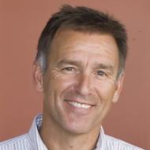
Dr. Ian Pike
Canada
Dr. Ian Pike — Turning Evidence Into Action. What if the real measure of a researcher isn’t how much they publish — but how much they change? That is the story of Dr. Ian Pike. For decades, Ian has transformed injury prevention from research on a page into action that changes policy, shifts behaviour and saves lives. As Director of the BC Injury Research and Prevention Unit, he helped build a model that connected epidemiology, social marketing, health promotion and public policy — creating a powerful bridge between evidence and real-world impact. The numbers tell part of the story:
136 publications, 58 reports, 133 invited presentations, two decades of leadership, almost 100 students mentored and more than $8 million leveraged for research. His work contributed to child-restraint legislation in British Columbia, strengthened injury-prevention education, developed national injury indicators and helped shape the next generation of prevention leaders. But the deeper legacy is impact beyond academia. Through Preventable, Ian helped turn research into a social marketing movement capable of changing attitudes, influencing behaviour and contributing to measurable reductions in injury-related deaths among its target audience. And perhaps his greatest achievement is the people he has inspired. Ian created teams where people wanted to learn, contribute and succeed — extending his influence far beyond his own research. As Pamela Fuselli of Parachute observed, injury prevention would not have advanced as far as it has without Ian’s vision, leadership and expertise. Ian Pike’s golden legacy is simple: he made prevention matter. He connected evidence to action, research to policy, and people to purpose — helping create safer lives for generations to come.
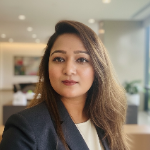
Divya Rastogi
India, united Arab emirates, Qatar
I’m Divya Rastogi, Manager — HSSEQ (UAE & Qatar) at TotalEnergies, with 14+ years leading safety, health, and sustainability across oil & gas, FMCG, logistics, and manufacturing. A two-time RoSPA Gold Award winner and Top 20 Women in Leadership honoree, I’ve driven Zero Harm and Behaviour-Based Safety programs impacting 80,000+ employees. I’ve designed award-winning dashboards and campaigns that make safety data and messaging genuinely resonate. As a RoSPA Gold winner and long-time ISMA juror, I believe the best safety communication doesn’t just inform — it changes behaviour.
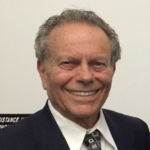
David Sleet, Ph.D.
USA
Dr David Sleet, Ph.D., is a research scientist who has led large-scale efforts to prevent injuries across global, US federal, state, and academic public health environments. He has published more than 200 articles and 3 books and has worked at the CDC and NHTSA, as well as in Finland, Belgium, and Australia, during his 50-year career in public health. He is Professor Emeritus at San Diego State University.
Diana Stark Ekman
sweden
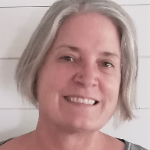
What if the data that explains why people are injured could become the evidence that prevents those injuries in the first place? That question sits at the heart of Diana Stark Ekman‘s work. A respected Swedish public health researcher, epidemiologist and academic, Diana brings deep expertise in injury prevention, safety promotion and population health. With doctoral training rooted in the Karolinska Institute and academic leadership across the University of Skövde and University West, she has built a research career focused on translating evidence into stronger prevention and safer communities.
With more than 30 peer-reviewed publications, her work spans injury epidemiology, child safety, drowning prevention, community health and the health challenges facing vulnerable populations, including asylum seekers and refugees. What distinguishes Diana is the connection she makes between evidence, prevention and real-world impact: understanding where and why harm occurs — and using that knowledge to identify where prevention can make the greatest difference. Her message is simple but powerful: better data creates better prevention, and better prevention can save lives.
Alvaro Valdivia Pareja
Peru
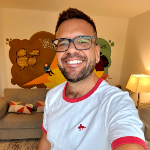
Clinical Psychologist and Suicidologist. Master in public health sciences in the specialization of suicide prevention by Karolinska Institutet, Sweden. National representative for the International Association for Suicide Prevention -IASP- 2024-2027. Trauma and Dissociation psychotherapist – EMDR psychotherapist. Qualitative researcher and university professor. LinkedIn
Dr Andres Villaveces
Colombia, USA, United Kingdom
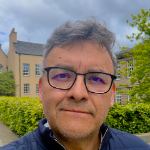
I connect what we know to what we do in global health. I lead evidence-driven initiatives that bring together science, policy, and practice to prevent injuries and violence, reduce inequities, and strengthen public health systems. Working across continents, I partner with governments, multilateral organizations, and academia to turn complex data into clear decisions — and measurable impact. My approach is grounded in systems thinking — focusing on the social and structural drivers of health. I’ve guided multimillion-dollar investments, contributed to shape national policies, and built cross-sector collaborations that protect high-risk populations. From advancing violence prevention strategies to informing global responses to COVID-19-related caregiver loss, my focus is consistent:
translate evidence into action that saves lives. And just as importantly, I invest in people — mentoring and equipping the next generation to lead with purpose and impact. Because in the end, impact isn’t what we know — it’s what we change. LinkedIn
Judy Williams
Australia
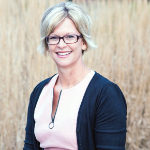
Global Programme and Communications Manager, International Road Assessment Programme (iRAP). Judy Williams is a seasoned communications professional, passionate about reducing road trauma through strategic communications, compelling narrative and stakeholder engagement. She supports the charity’s partnerships with the UN, international agencies, governments, development banks, mobility clubs, industry and NGOs across 140 countries for a world free of high-risk roads. She manages and tracks the impact of the global program, empowers and connects partners, brings stakeholders together in large-scale events, and promotes life-saving initiatives. Judy was awarded the 2025 ACRS (Australasian College of Road Safety) Women in Road Safety Award for her global impact in reducing road trauma.
Her work has been recognised through the International Safety Media Awards. Judy holds a Bachelor of Business in Communications from the Queensland University of Technology and is committed to fostering safer, sustainable mobility worldwide. LinkedIn
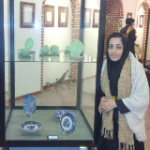
Zahra Zare
Iran
What if preventing injury was not only about treating the patient — but about redesigning the systems that determine who gets access to care, when, and how? That is where Zahra Zare’s work makes a difference. Zahra is an epidemiologist and public health researcher whose work connects injury prevention, health services management and disease prevention with a practical focus on improving health outcomes and strengthening healthcare delivery. Her research spans trauma and injury epidemiology, the psychological consequences of severe injuries, healthcare regionalisation, access to services, specialised health delivery and emerging applications of artificial intelligence in healthcare.
What distinguishes Zahra is her ability to connect evidence with systems thinking — using epidemiological data, health-service research and analytical approaches to identify where healthcare systems can work better and where prevention can have the greatest impact. Her experience also extends beyond research into community practice, including health training and prevention initiatives supporting people with physical disabilities. Zahra’s work reflects a powerful principle: when we understand where harm occurs, why it occurs and how systems respond, we can move from treating consequences to designing better prevention — and ultimately healthier, safer communities. LinkedIn